HVAC applications · Workpieces and processes
HVAC Sheet Metal Fabrication: Ducts, Dampers and Unit Enclosures
From duct connections and damper frames to unit enclosures and access doors, review the flange, the visible face and the assembly interface, then choose the forming machine. Ductwork fabrication and sheet metal duct fabrication start from the same workpiece checks.
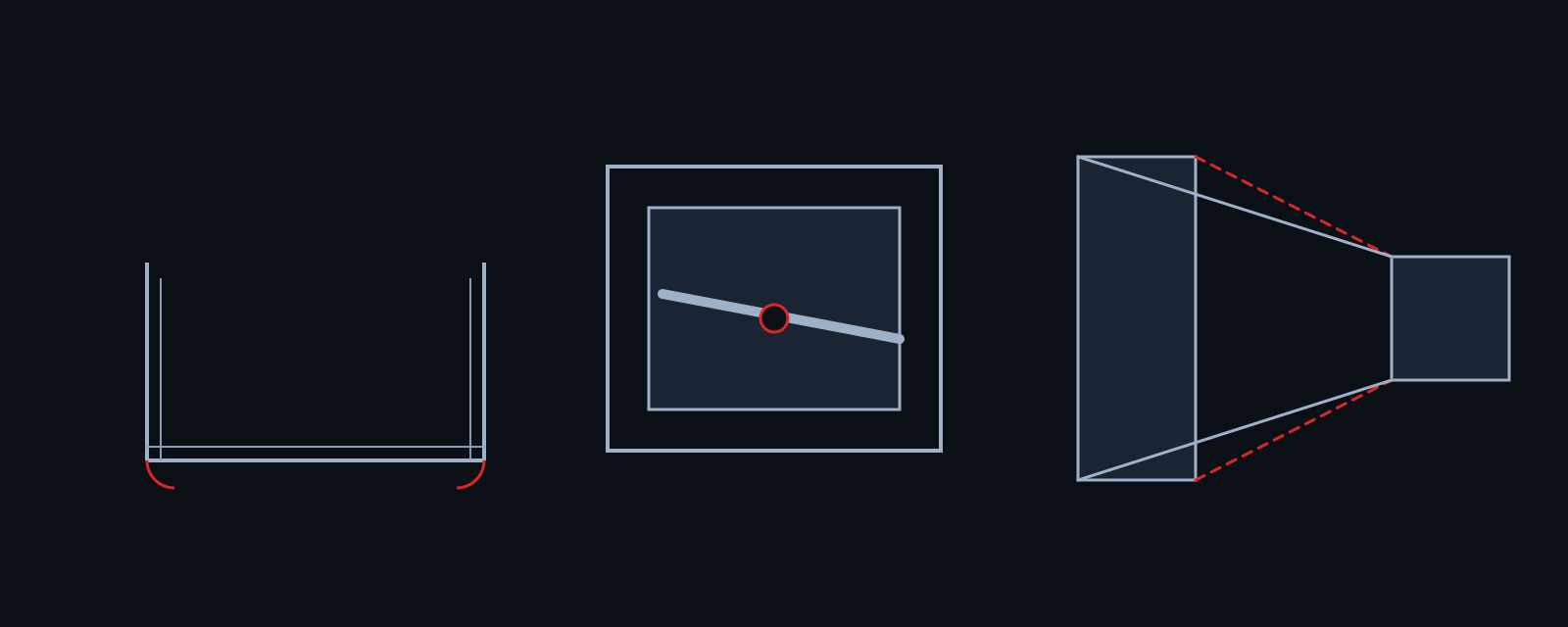
HVAC sheet metal fabrication covers ducts, dampers, AHU enclosures, access doors and duct flanges. Whether the shop calls the work HVAC duct fabrication, sheet metal duct fabrication or ductwork fabrication, the first checks are the cross-section, the joint and the visible face. The following are simplified workpiece diagrams; the reference numbers correspond to key locations; drawings are not to scale.
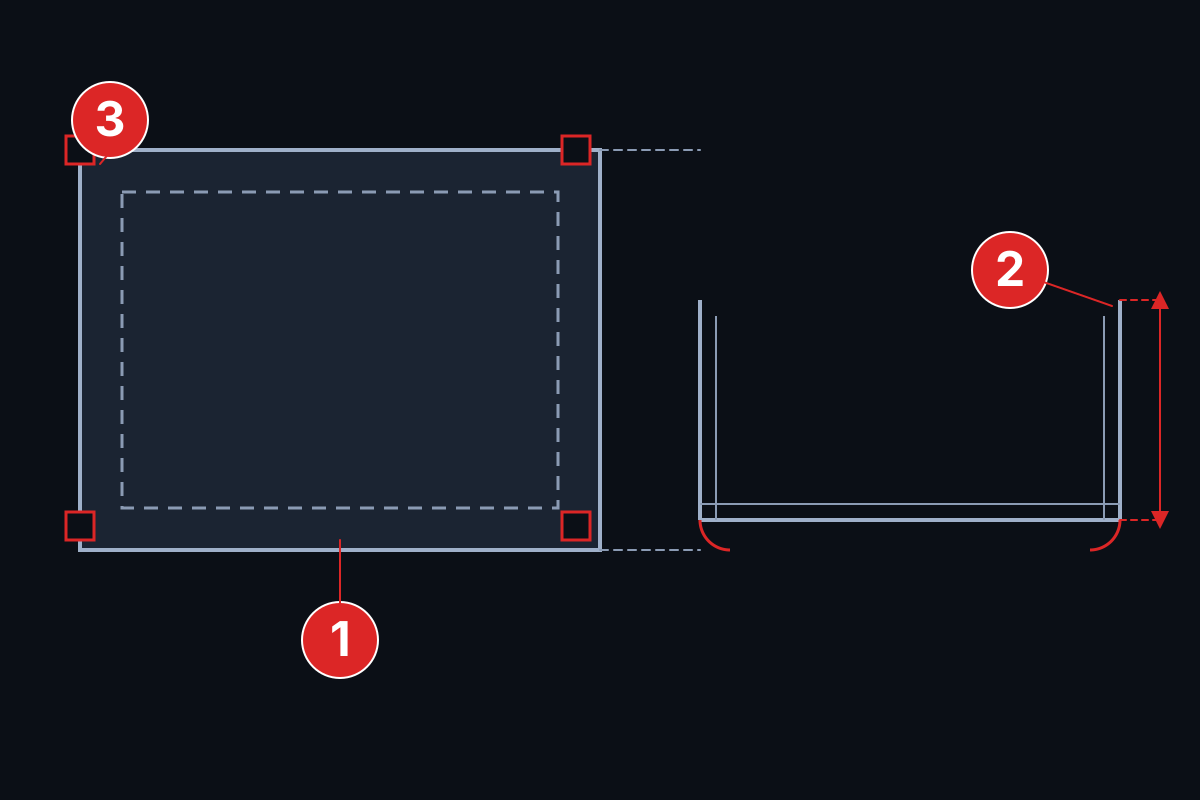
Unit enclosure panel
①The visible face needs protection during handling and die contact; ②the flange height affects rigidity and the assembly interface; ③corner relief is prepared during blanking. Long panels also require consideration of workpiece support and angular consistency along the bend line.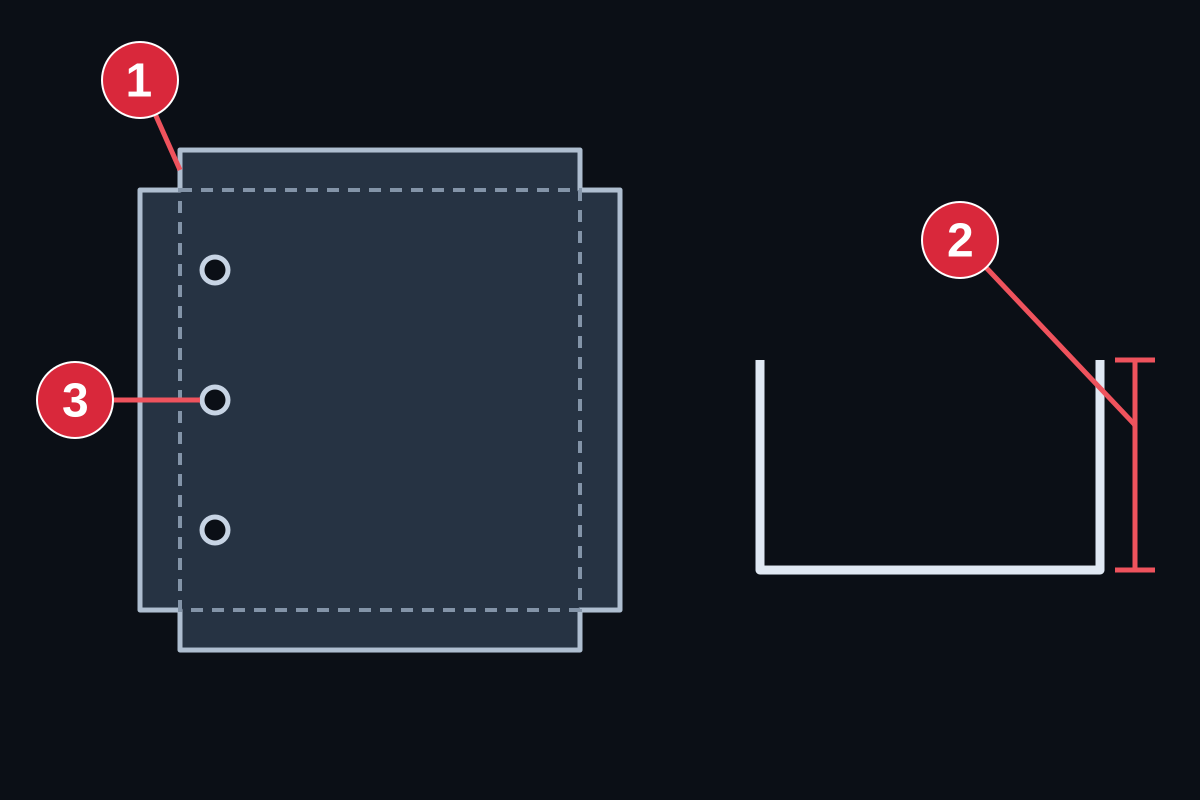
Access door and viewing panel
①Corner relief gives adjacent flanges room to form; ②the surrounding return flange affects die accessibility and part removal; ③hinge or fastener holes must be checked against the post-forming mounting datum. Whether the door panel fits must be judged together with the mounting opening.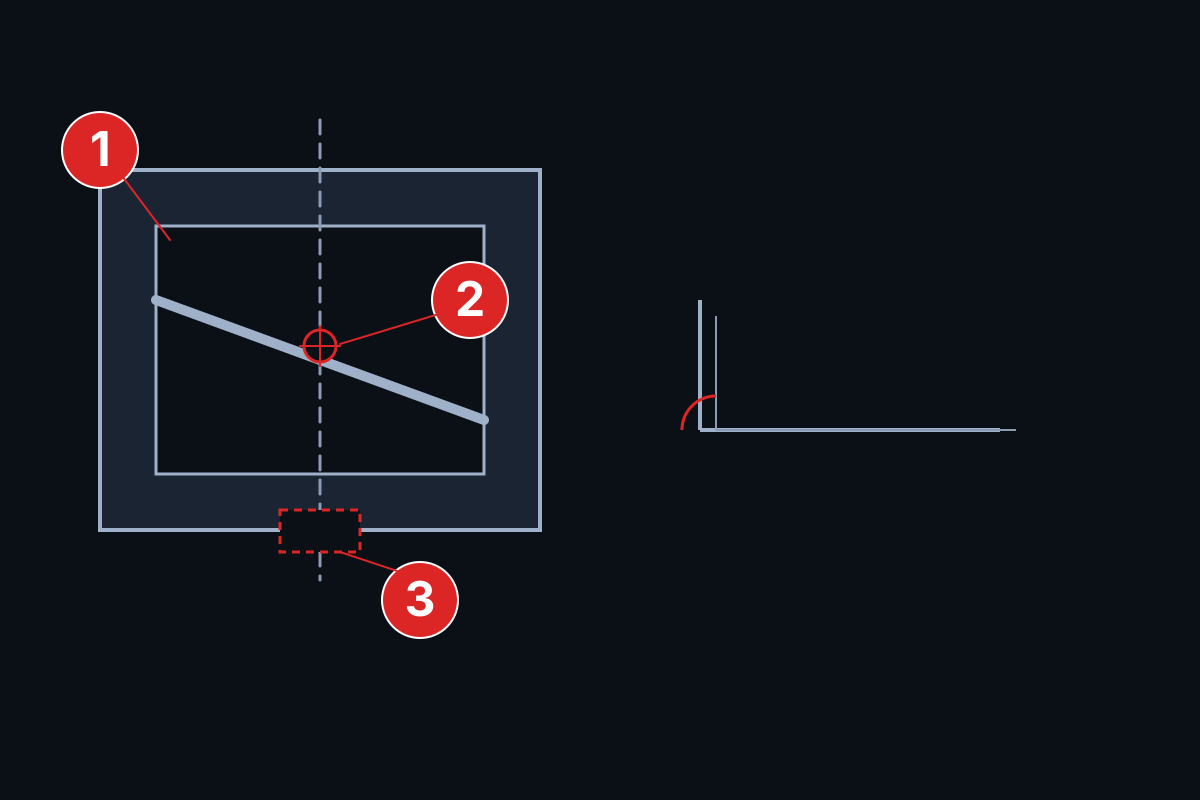
Damper frame and blade interface
①The frame bar bend lines form the cross-section; ②the blade axis determines the mating datum; ③notches provide clearance for connections or moving parts. First separate the frame bars, blades, and connectors, and determine the forming and assembly routes for each.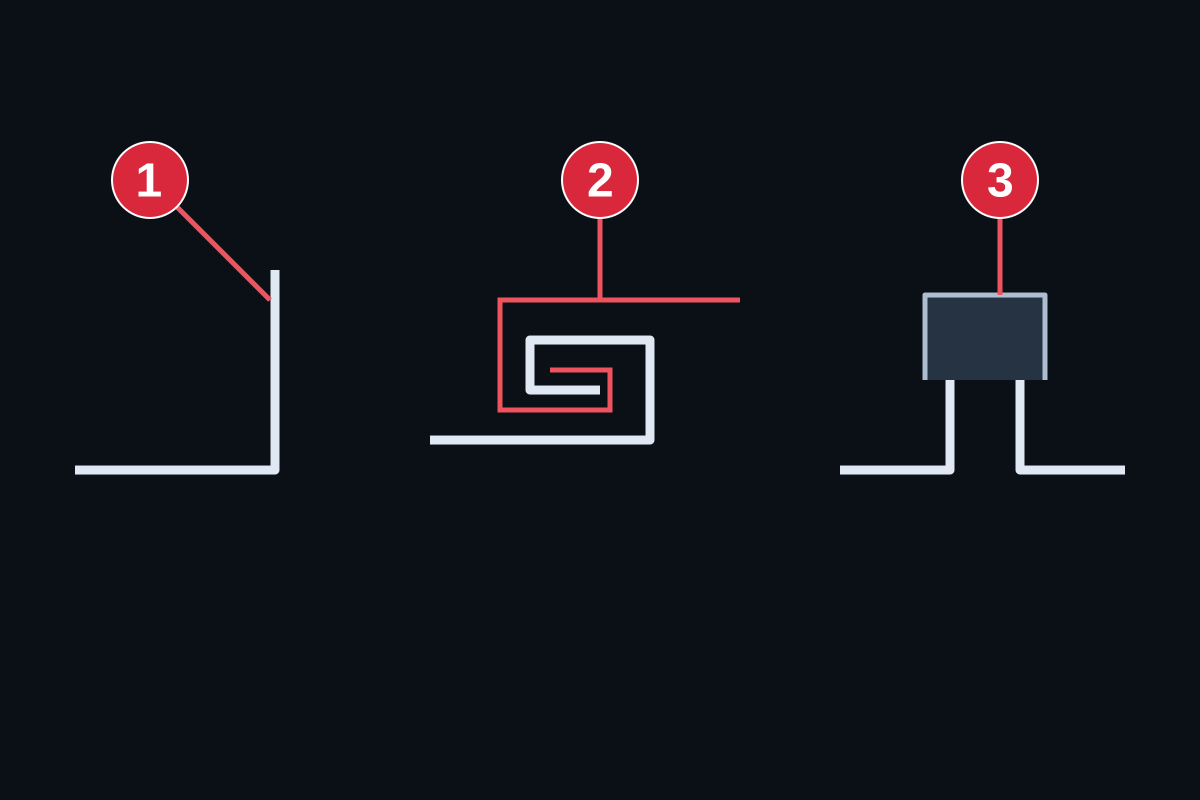
Duct connection flanges
①Plain corner flanges, ②interlocking seams, and ③separate connectors serve different tasks. Look at the connection cross-section first, then distinguish bending, seam-edge forming, and closing operations; do not choose tooling based on the name “flange” alone.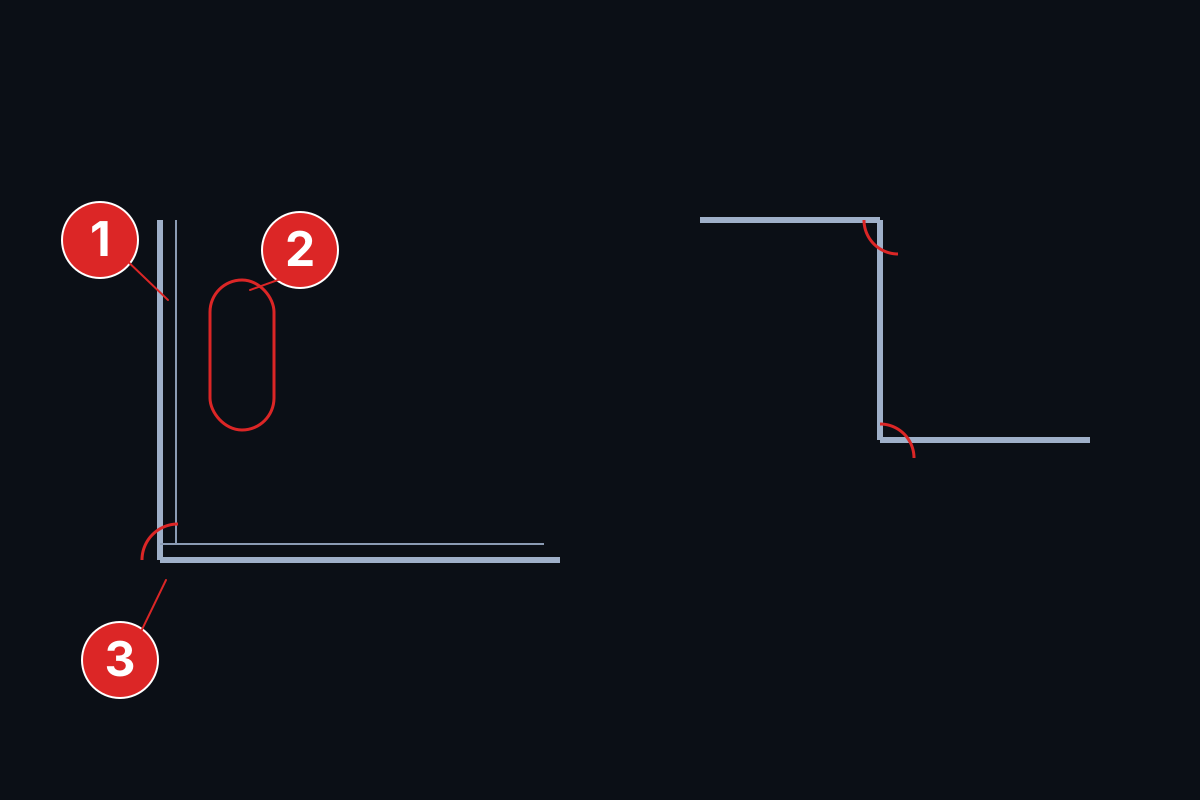
Hangers and mounting brackets
①The mounting face and ②the locating slot together determine the assembly position; ③the bend at the corner connects the two legs. Check slots and mounting faces against the post-forming datum; load capacity also depends on material, connections, and structural design.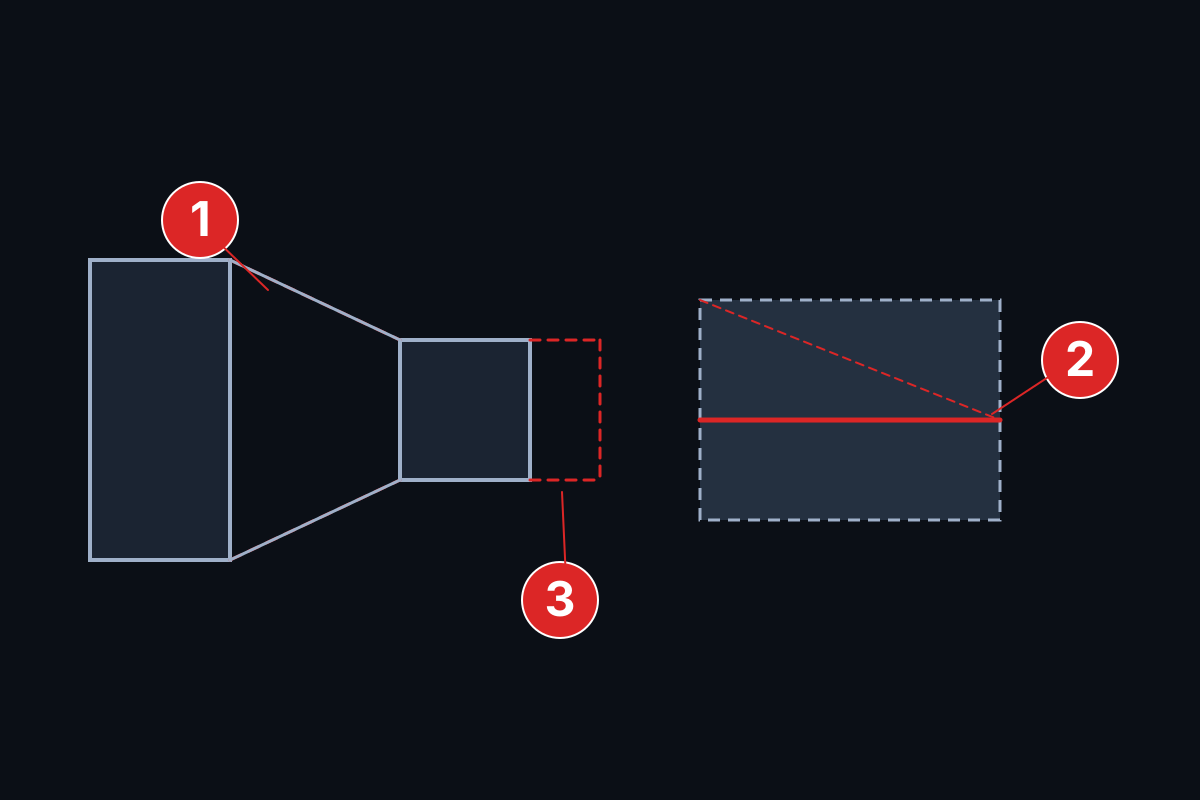
Duct transition
①Angled bend lines form the variable cross-section; ②the closing seam affects the processing sequence; ③a path for part removal must still remain after the last bend. First break down each face and seam, and determine which areas are straight-line bends and which require other forming methods.
Follow one access door panel through the whole process
This teaching example uses a shallow tray-shaped door panel with a single flange on all four sides and pre-cut corner relief, with no secondary return flange. The figures show how the workpiece shape changes; the actual flanging sequence must be determined together with punch, clamping, support, and part-removal space.
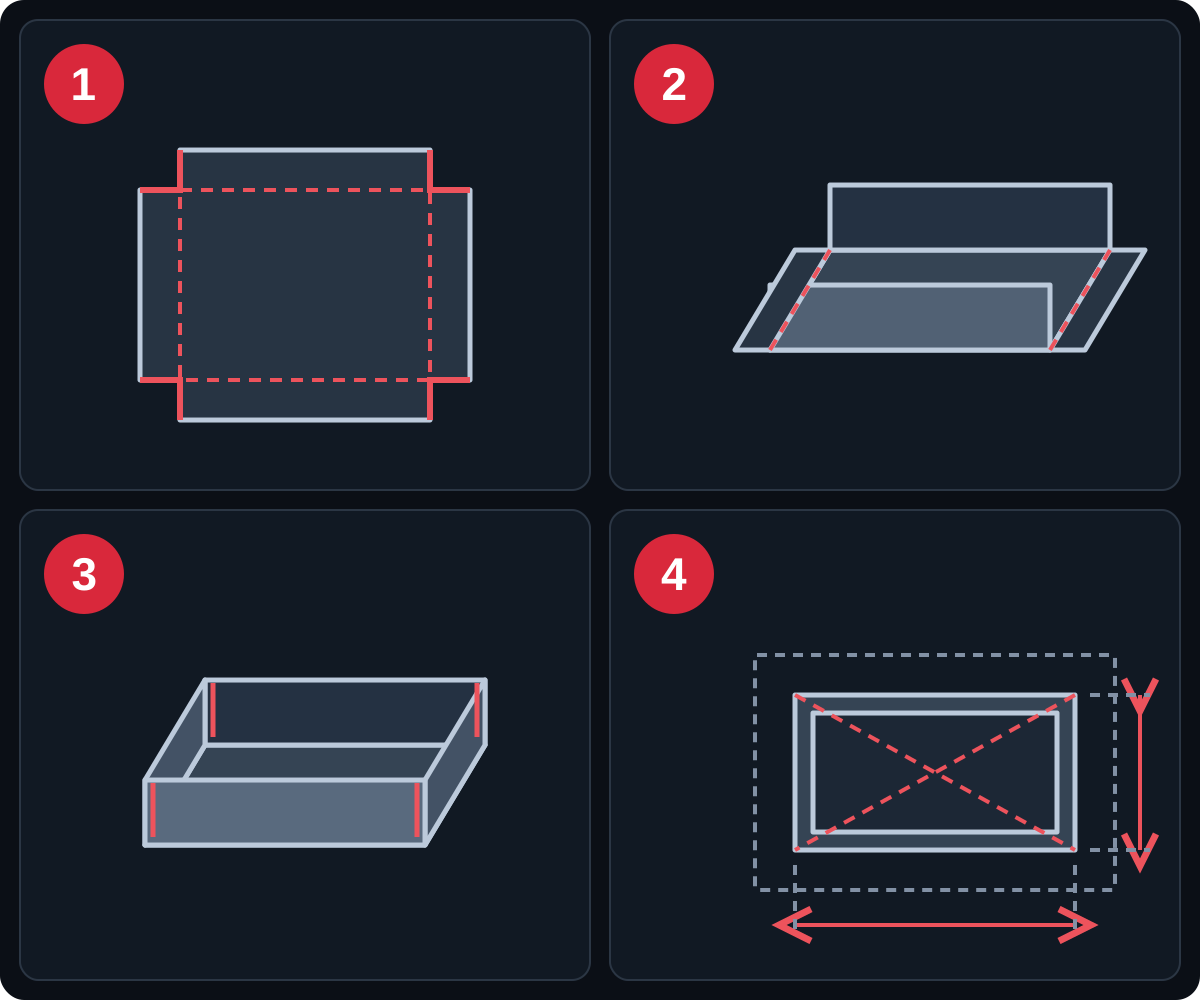
- 1 · Prepare the blank first. Mark the visible face, bend lines, and mounting-hole datums, and leave corner relief as shown on the drawing. The developed length of a flange depends on the bend radius; you cannot simply add up the finished side dimensions.
- 2 · Form two opposite edges. The example first shows the state after the two long edges are folded up. Before each operation, give the sheet stable support and define the backgauge contact position; measure the angle and leg length after unloading, then decide whether adjustment is needed.
- 3 · Complete the other two edges. The already-formed side edges will come near the die; first check their spatial relationship with the punch, clamping areas, and machine body. If there is interference, adjust the tooling or sequence; the forming motion and the part-removal path must be verified together.
- 4 · Return to checking the assembly interfaces. Compare the finished outer shape, diagonals, and mounting-hole positions against the same drawing revision, then check the fit between the door panel and the opening, hinges, and sealing interface. The mounting opening in the figure is an inspection reference and does not represent an agreed fit clearance.
Three processing difficulties most worth solving in advance
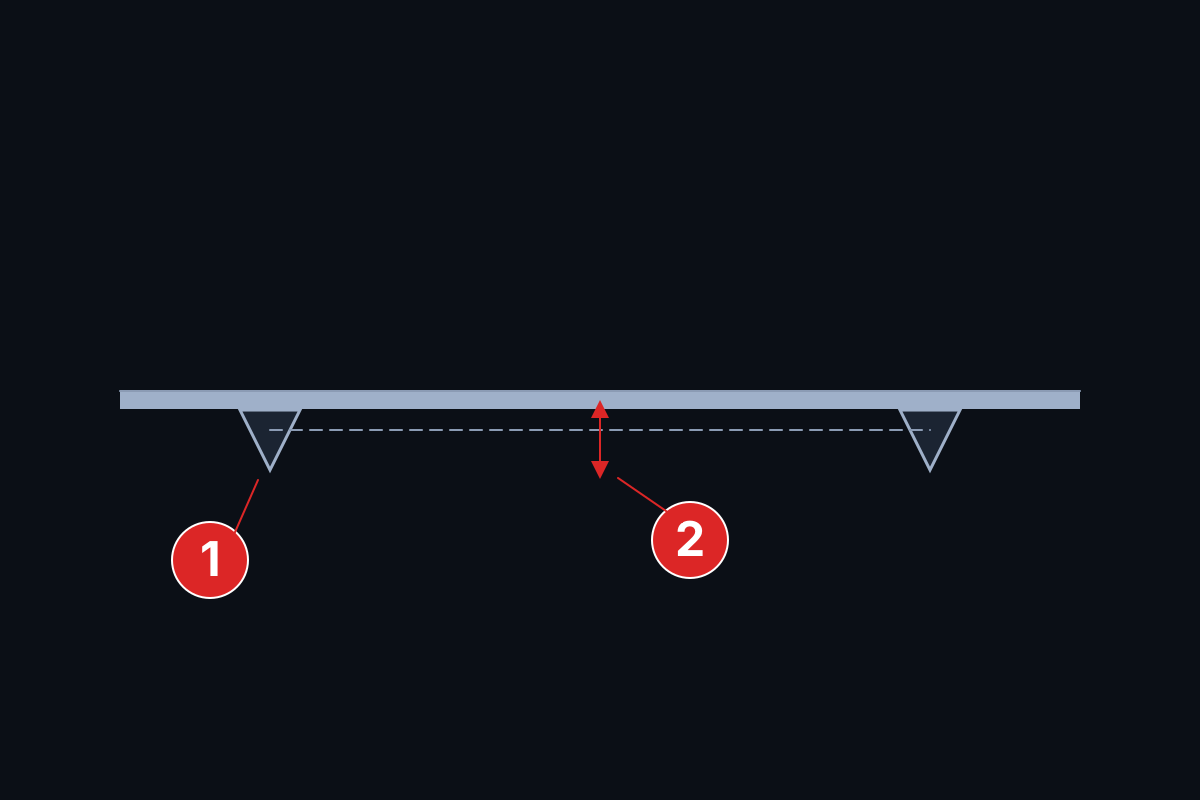
Long thin sheets: solve support and locating first
①Support points help control the sheet's posture; ②a middle measuring point is used to compare forming results along the bend line. The two ends may have suitable angles while the middle still differs. Record the material, tooling, and measuring positions, then separate the effects of support, settings, and material variation.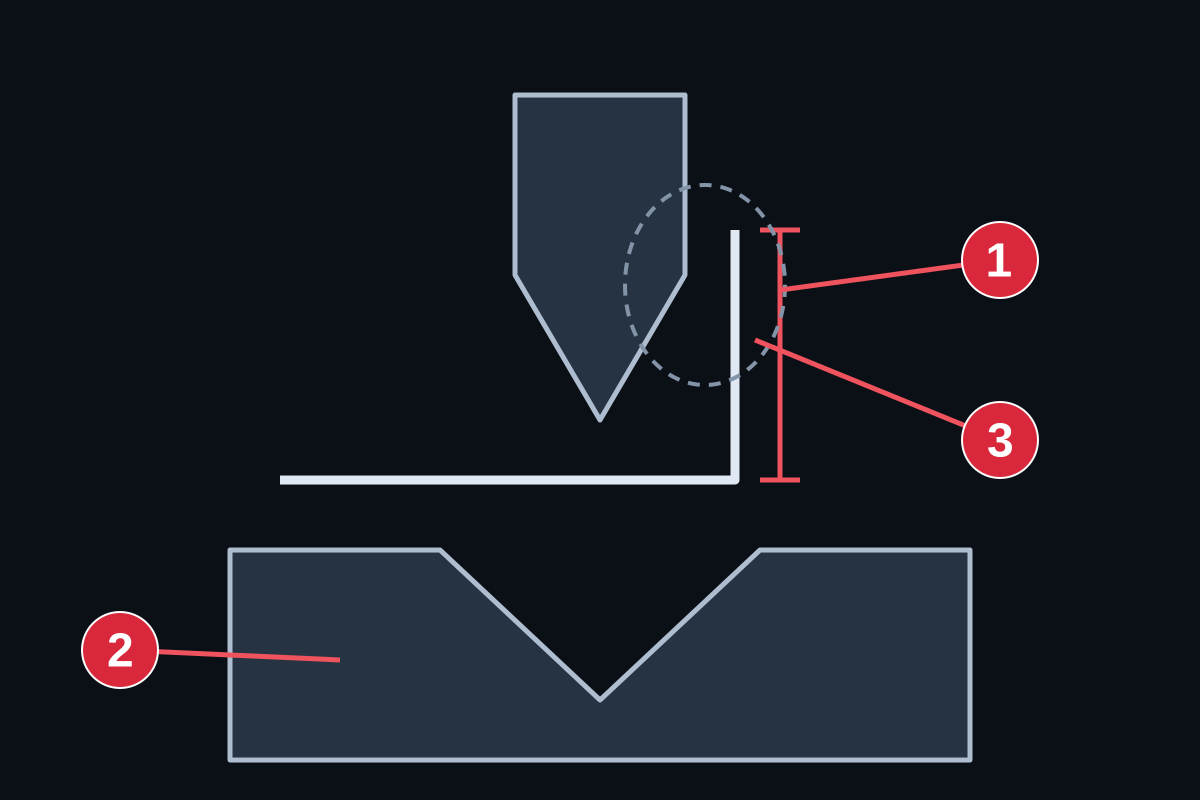
Short return flanges: look at support and interference together
①The return flange height must be checked against ②the actual punch and lower die profile. ③Mark where the already-formed edge may contact the tooling. Whether a short edge can be stably supported on the lower die and whether the return flange contacts the tooling are two separate questions and must be verified separately.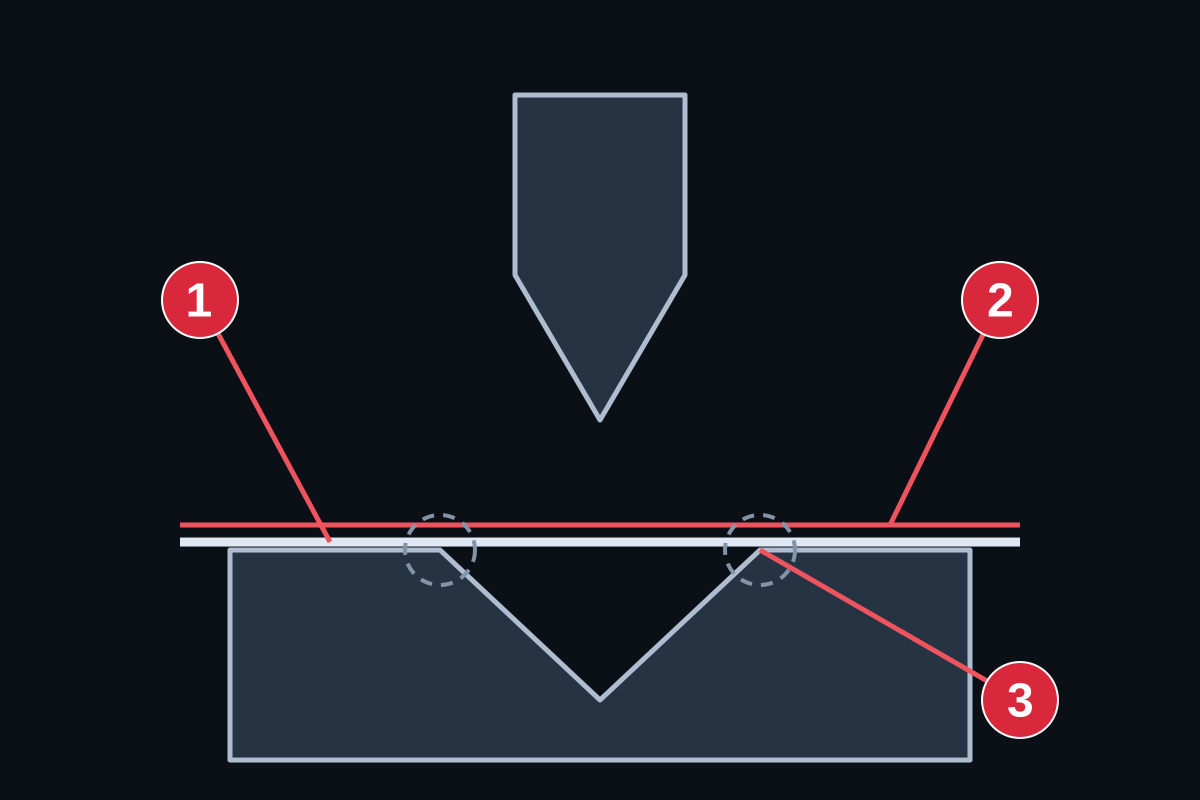
Visible faces: consider contact and handling together
①First mark the visible surfaces that need protection; ②whether protective film can be used should be confirmed together with the material and forming process; ③contact at the die shoulder must also be checked. Compare the surface after forming and handling using representative material, and when scratches appear, trace the contact location.
Different materials call for different settings and checks
Record the sheet metal gauge for HVAC parts together with the actual thickness, because the nominal gauge is not a forming capacity. For galvanized sheet, pay attention to coating contact and damage; for stainless steel, distinguish the visible face and surface condition; for aluminum, clarify the grade and temper. Check the angle after unloading with representative material. Springback compensation is used to adjust the forming angle; the K-factor is used to estimate the blank length, and the two cannot substitute for each other.
Put bending back into the complete manufacturing route
From blanking to assembly, assign tasks by the actual cross-section first. Unit panels and duct seams do not have to follow exactly the same route.
Panels, door panels, and brackets
Blanking and hole/slot preparation → plain corner bending → connection as designed → surface treatment and assembly inspection. When the material already has a coating, surface protection runs through blanking, forming, and transfer.
Duct parts with seams
Blanking → seam-edge forming and main body bending → seam closing → sealing and inspection as required. The sequence is determined by the cross-section and equipment access; a standard press brake does not automatically cover lock forming, closing, and sealing.
For straight-line blank cutting before bending, compare Guillotine Shearing Machine against the drawing, material and cut-quality requirements.
Let workpiece conditions determine the equipment route
Compare forming methods first, then move on to machine parameters. Bending length and required force are only the starting point; tooling, clamping, rotation, support, and part-removal space also determine whether the workpiece can be completed.
For sheet metal for HVAC parts, match the machine to the workpiece rather than the industry name: a press brake for duct work handles flanges, frame bars and brackets; a panel bender for AHU casings suits repetitive flat panels; shearing for duct blanks prepares straight edges; plate rolling for duct transitions forms curved sections. Each route still needs the tooling, support and part-removal checks below.
| Processing task | Compare first | Conditions that determine the choice |
|---|---|---|
| Brackets, frame bars, and flanged parts with different cross-sections | Press brake route | Effective length, force and tooling limits, short-edge support, locating, and relief |
| Repetitive unit panels and door panels | Press brake vs. panel bender | Workpiece dimensions, flange height, clamping and rotation space, changeover method |
| Handling and bending with stable repetitive tasks | Further compare robot cells | Whether gripping surface, flipping, repositioning, loading/unloading, and changeover can be linked together |
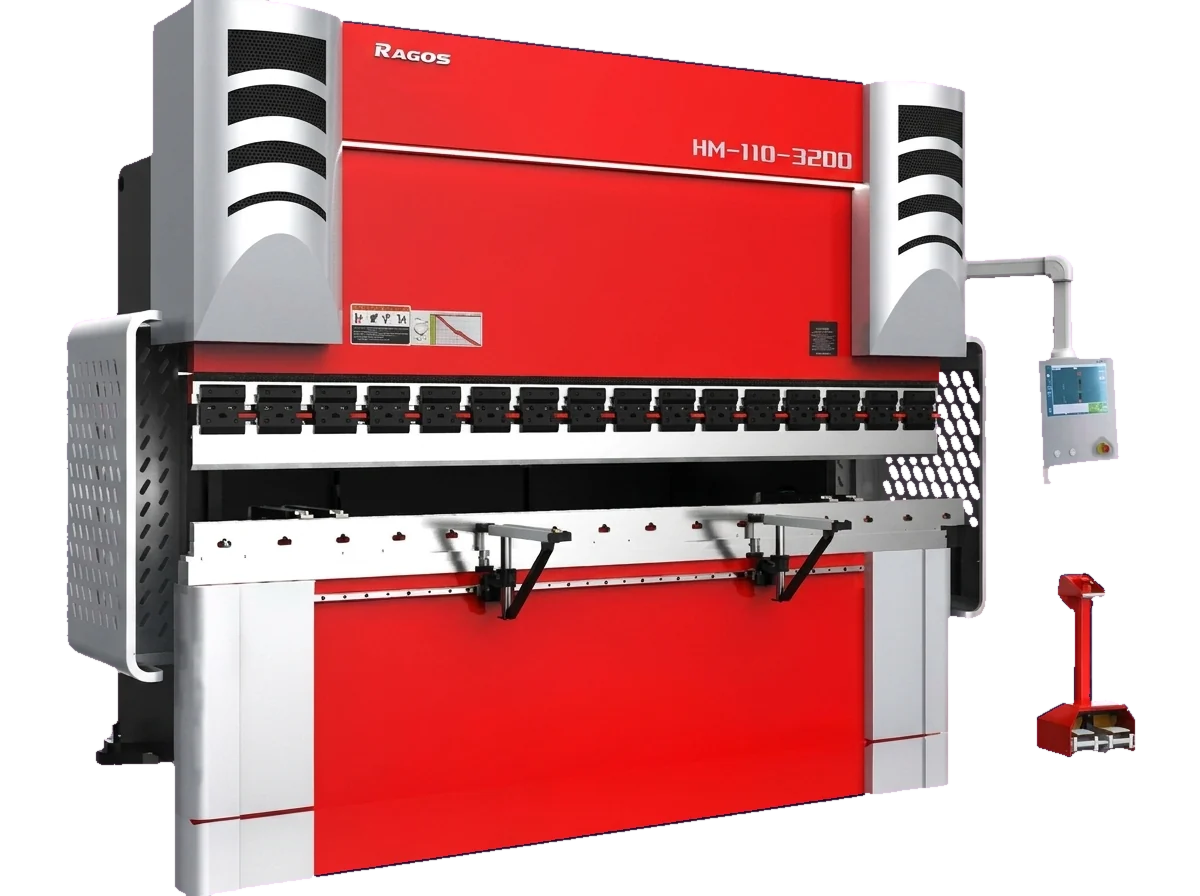
Press brake series
Compare different cross-sections and tooling tasks, then look at each series' structure and parameters. Machine selection should take the processing sequence of the whole part into account.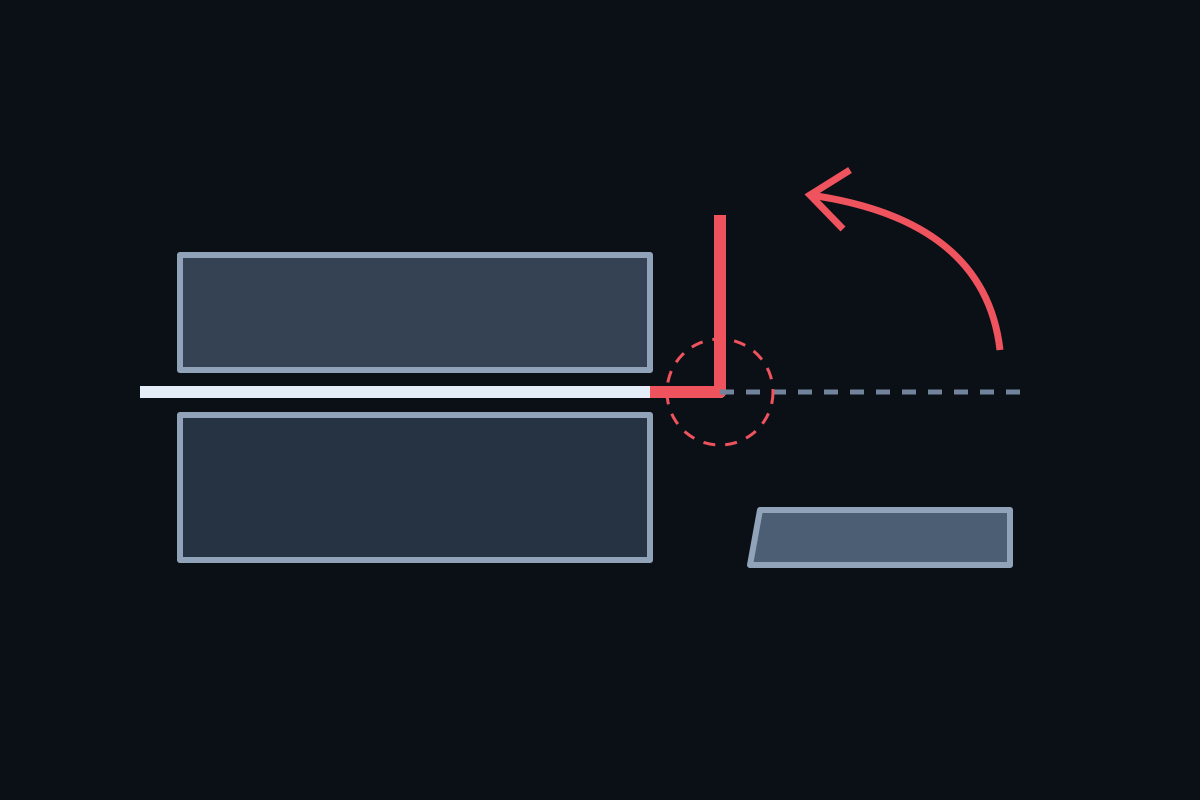
AG/AGP panel bender
Panels and door panels can be compared along this route; focus on clamping conditions, workpiece dimensions, and flange requirements, then move on to model parameters.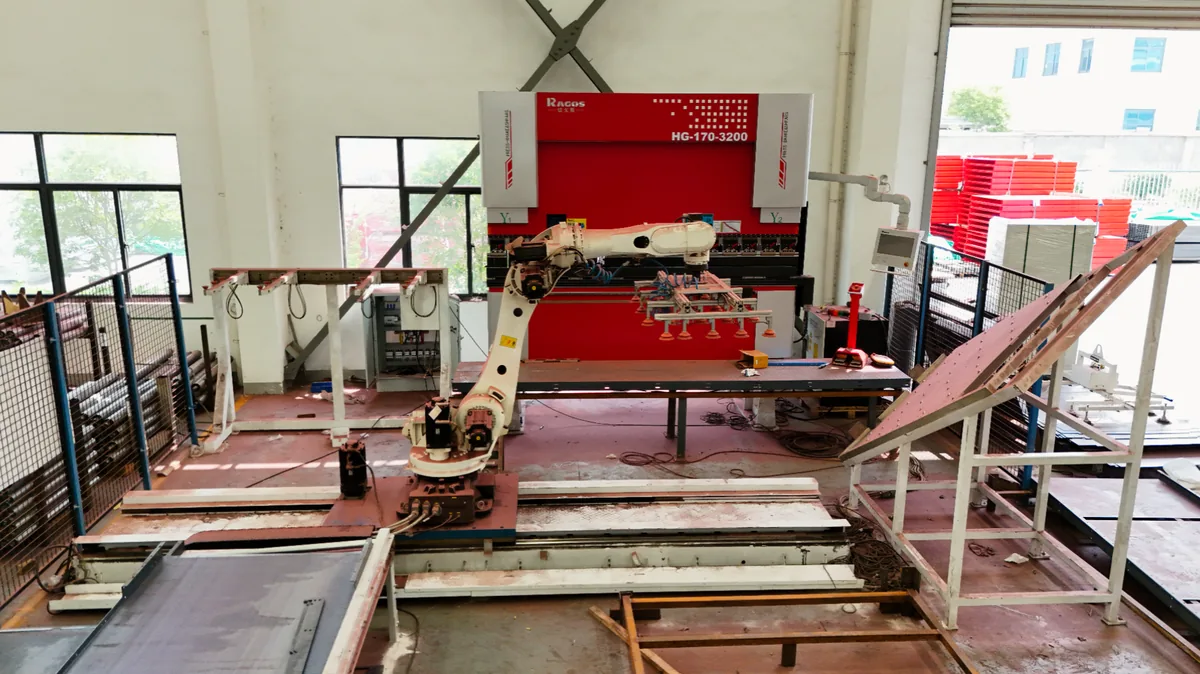
Robot bending cell
When workpieces involve repetitive handling tasks, further verify gripping, flipping, and repositioning; the scope of automation is determined by actual workpiece and cycle-time validation.
For more on the structure of a fixed upper beam with a rising worktable, see MG up-acting press brake
First-article inspection should return to the actual mounting position
Keep drawing revision, material, and tooling information so measurement results can be traced to the same workpiece and the same setup. The following three check groups can run through first-article approval:
- Forming dimensions: define the dimension datum, and measure leg length, angle, and outer shape after unloading; compare long bend lines at agreed measuring points, not just one end.
- Assembly fit: for door panels, check the opening, diagonals, hinge holes, and sealing interface; for damper frames, check the common datum and clearance for moving parts; check connection flanges together with the mating part.
- Surface and repeatability: inspect visible faces and coatings under agreed viewing conditions, and keep approved test pieces. Record whether the check was done before or after connection or painting, and compare subsequent workpieces at the same stage.
FAQ
What machine bends HVAC duct?
A press brake forms the flanges, frame bars and brackets; a panel bender can be a candidate for repetitive flat panels such as access doors and casing panels. The choice depends on the workpiece dimensions, flange height and the handling sequence, not on the industry name.
What gauge sheet metal is used for HVAC?
The gauge follows the duct class, pressure and project specification, so no single figure applies to every job. Record the specified gauge and the actual thickness, then check the forming force and tooling against the chosen material.
How do you fabricate HVAC duct?
The route starts with blanking, then seam or flange forming, bending, closing and sealing as the cross-section requires. A press brake performs the bending; lock forming, closing and sealing are separate operations and must be reviewed in the route.
Do you supply complete duct lines?
The published range covers forming machines such as press brakes, panel benders, shears, rollers and V-grooving machines, not a complete duct line. Feeding, lock forming, closing and sealing equipment remain separate scope items.
Related pages
Equipment and quotations
Contact JS Ragos for machine models, configurations and quotations.
Get a quote