A Y-axis drive belt can still be intact when it needs replacing. On a belt-driven electric press brake, belt tooth wear can introduce lost motion and make the ram less repeatable. If the belt reaches the manufacturer's wear limit, or a technician confirms that belt wear is causing the Y axis to fall outside the required tolerance, the shop may have to stop production for a replacement. The outage ends when the brake can make acceptable parts again.
On a typical electro-hydraulic press brake, hydraulic cylinders drive the ram. A backgauge belt, where fitted, moves the gauge to position the sheet. On a belt-driven electric brake, the Y-axis belt is part of the drive that moves the ram during the bend. The location of the belt determines what to check after a replacement. Electric versus hydraulic press brakes
When should you replace a Y-axis belt?
The belt is intact but Y-axis positioning has changed
Timing-belt tests show that clearance between the belt and pulley teeth can contribute to transmission error when the drive reverses. If belt or pulley wear increases that clearance on an electric press brake, the motor pulley can take up some of the play before the screw side follows. The effect on ram repeatability depends on where the machine measures Y-axis position and how the control uses that feedback. Study of timing-belt transmission error on reversal
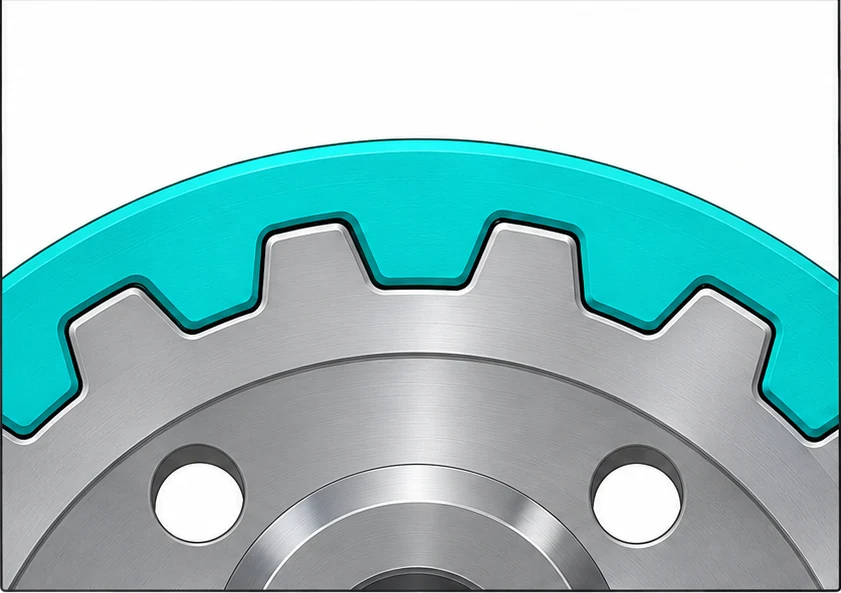
Normal engagement
Worn belt teeth
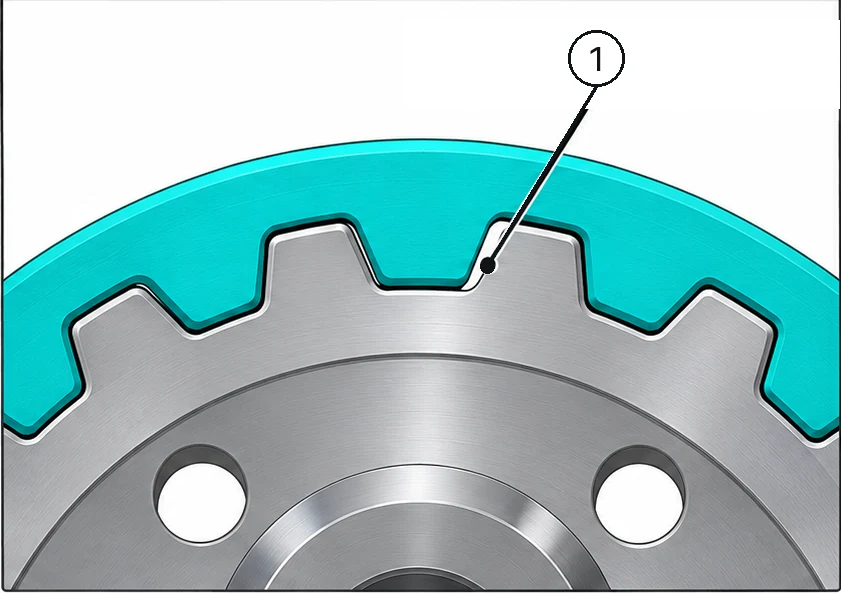
Have service compare measured Y-axis repeatability with the machine's acceptance results. Use the same tooling and comparable material for the trial bends. If the part angle has changed, check the tooling, material, feedback, and ball screw condition as part of the diagnosis. Replace the belt when it reaches the manufacturer's wear limit or service confirms it is causing the axis to miss the required tolerance. Record the result after replacement. Belt tension and ball screw maintenance · Why bend angles change with a new material lot
The machine stops on a belt slack fault
On a machine with belt-slack monitoring, an alarm can stop production while the belt is still intact. On a timing-belt drive, too little tension can let the belt jump teeth, and shock loading can contribute to a tensile break. When a belt wears out early, have service check the belt and pulleys for wear and verify the alignment and tension. Gates synchronous belt troubleshooting manual
How the two electric drive layouts load the belt
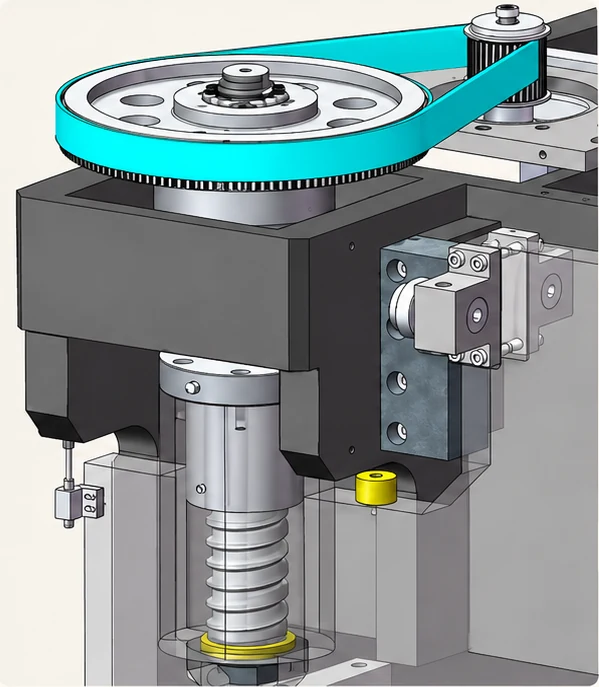
Timing Belt + Ball Screw
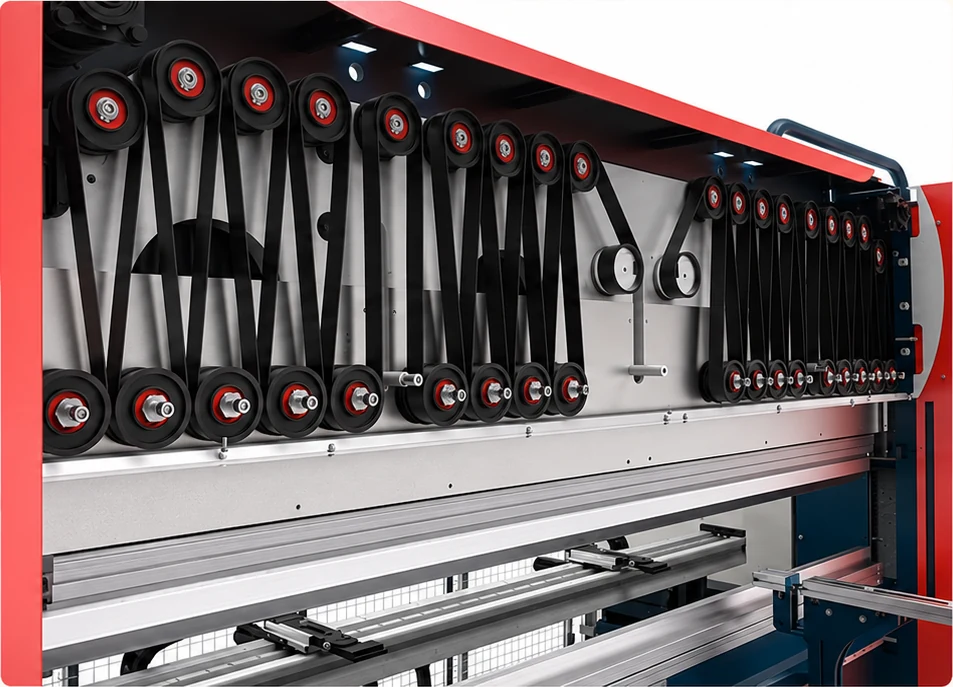
Belt-and-Pulley Bank
| Y-axis drive | What the belt carries | What to discuss with service |
|---|---|---|
| Belt and pulley banks | The belt carries tension through fixed and moving pulleys, which distribute force along the press beam. | Upper-beam belt condition, tracking, pulley condition, and slack monitoring where fitted |
| Timing belt and ball screw | The belt transmits torque through its teeth. The screw and nut convert rotation into axial force and carry the bending load. | Belt tooth and pulley wear, tension, alignment, and ram position checks |
In China-made belt-driven electric press brakes, the timing-belt-and-ball-screw arrangement is common in publicly documented models. Ask the supplier for the Y-axis drive drawing so you can identify the belt and get the right service quote.
How higher bending force affects timing-belt load
On the same timing-belt-and-ball-screw machine, a higher bending force generally requires more torque at the screw. The belt then has to transmit more torque, which increases the tension difference between its tight and slack sides. Pulley torque equals that difference multiplied by the pulley pitch radius. With the same torque, a smaller pulley radius requires a greater tension difference.
When comparing two machine sizes, ask for peak belt tension at the force your job actually requires. Pulley size, screw lead, and how the drive shares the load can all change the force carried by an individual belt.
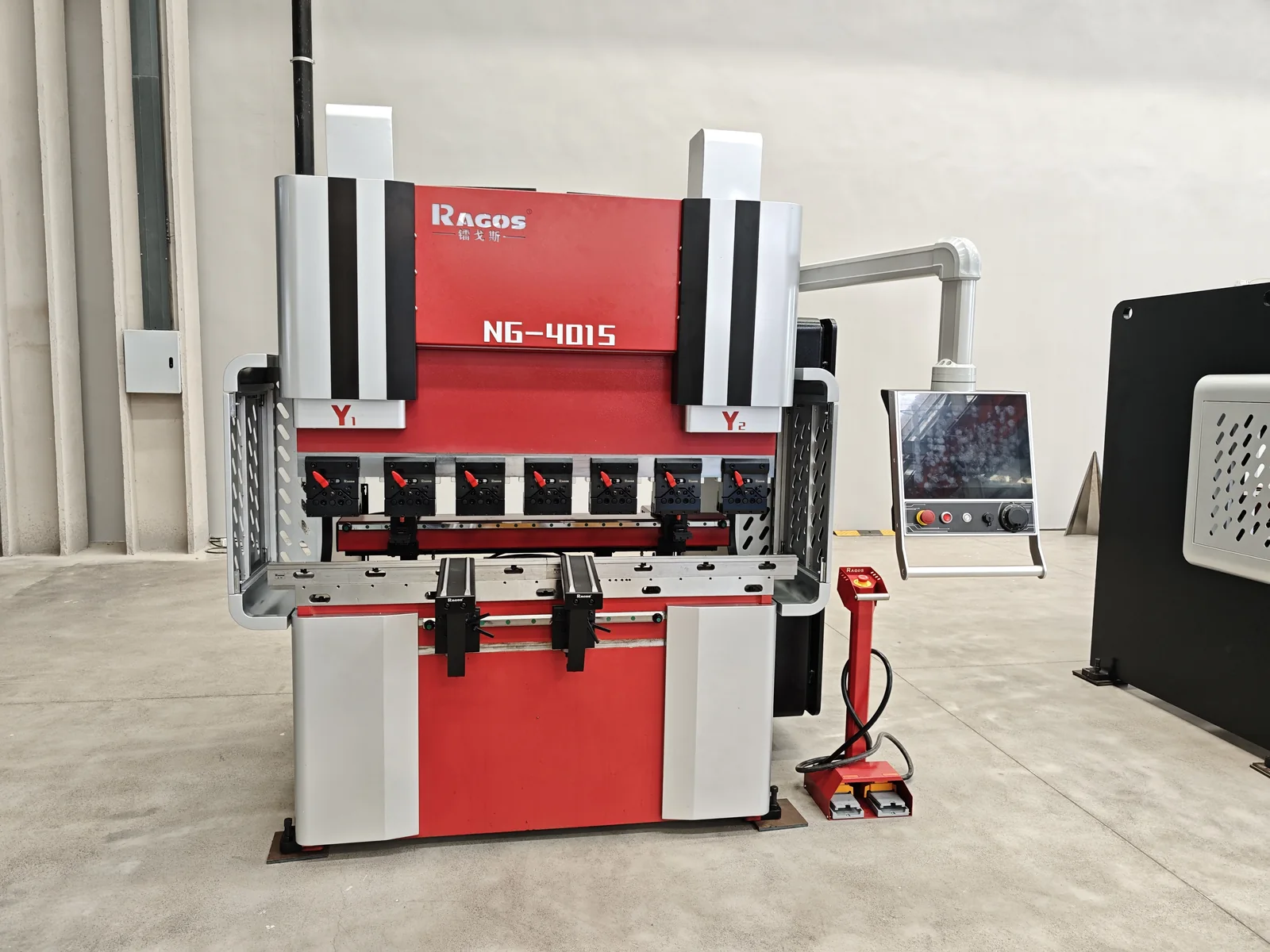
Which drive does RAGOS recommend through 80T?
For typical sheet-metal work, the RAGOS team recommends the following starting points for balancing purchase cost, bending requirements, and maintenance over time.
| Machine force rating | RAGOS recommendation |
|---|---|
| Below 60 metric tons-force (about 66 US tons-force) | Start with a timing-belt-and-ball-screw electric press brake when it meets the job's force, bend length, and production rate. This is RAGOS's usual value choice in this range. |
| 60–80 metric tons-force (about 66–88 US tons-force) | Start with a direct-drive electric press brake. The servo motor directly drives the screw assembly, removing the Y-axis drive belt and the inspections and replacement work associated with it. The ball screw carries the bending load and has its own service schedule. |
Treat these ranges as RAGOS selection guidance for typical applications. Confirm the force required by the part, the allowable load at the intended tool station, and the expected production cycle before comparing quotes. Check press brake tonnage for your part
What adds to the cost of a Y-axis belt replacement?
- 01
- Diagnose the fault and identify the spare. Use the machine serial number to confirm the part. For a machine with more than one main-drive belt, ask whether the manufacturer calls for a single replacement or a set.
- 02
- Allow for freight and the service visit. Ask where the belt is stocked, when it can arrive, and when a technician can work on the machine.
- 03
- Include the manufacturer's post-installation checks. The service scope can include belt tension, tracking or pulley alignment, the ram reference position, and a Y1/Y2 check on a dual-axis machine.
- 04
- Time the return to production. Compare a representative trial bend against the accepted part tolerance. On a long part, check the angle at the left, center, and right. Use the first conforming part as the end of the outage.
A $300 belt in a $2,080 outage — illustrative example
| Cost in this illustrative example | Amount |
|---|---|
| Y-axis replacement belt | $300 |
| Expedited freight | $200 |
| Diagnosis, installation, and verification | $500 |
| Direct repair cost | $1,000 |
| Six unrecovered production hours at $180 per hour in lost contribution margin | $1,080 |
| Total before any extra transfer costs | $2,080 |
In this example, one eight-hour shift is disrupted, and another brake takes two hours of the work. If the remaining work can be recovered later, use the actual cost of recovery, such as overtime or outsourcing. If the work is lost, use the contribution margin the shop would have earned after avoidable costs.
At quote stage, ask how long it takes to get the specified Y-axis belt, who can fit it, and what the service technician will measure before you release the machine. A price for the spare and a time to the first accepted part give you two figures you can compare across suppliers.
Before production restarts
- Confirm the replacement criterion from the machine's wear limit or the measured axis result.
- Use the serial number and drive drawing to identify the belt, layout, and installation scope.
- Record tension, alignment, reference-position, and trial-part checks; the first conforming part closes the outage.