Electric press brake maintenance should cover belt condition, dust around the Y-axis screw, lubrication, and changes in ram repeatability. Start with the drive drawing for your machine so each inspection and lubrication task is assigned to the correct component.
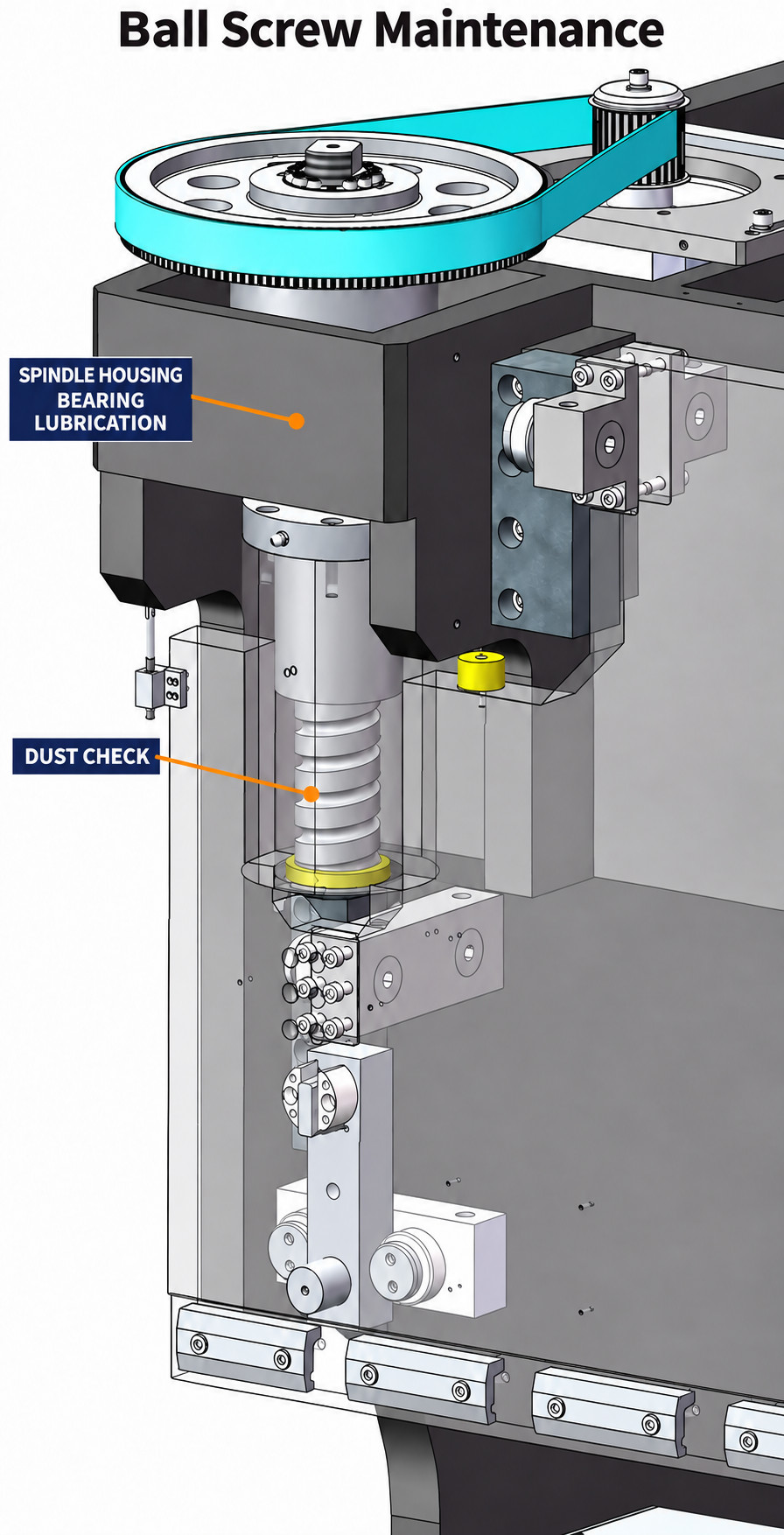
For the assembly illustrated below, check dust on the exposed screw and supply oil to the bearings inside the ball-screw bearing housing (labeled "spindle housing" in the illustration).
Where the supplied lubrication diagram shows manual oiling for that bearing housing, we recommend a baseline interval of 100 operating hours for manual oil replenishment. Where the diagram shows the housing connected to the automatic oil circuit, the lubrication unit supplies it instead. Check the diagram for your machine to see which arrangement applies, and adjust the maintenance plan to the machine instructions and working conditions.
What should an electric press brake maintenance plan cover?
| Service item | What to inspect or record | When to check |
|---|---|---|
| Y-axis drive belt, where fitted | Belt and pulley wear, alignment, specified tension, and any slack alarms | At the machine's specified interval and after signs of a problem |
| Exposed Y-axis screw and its guards | Dust, debris, and the condition of the protected area | Set inspection and cleaning frequency to suit shop dust levels |
| Ball-screw bearing housing on the illustrated arrangement | Correct lubricant, replenishment record, and designated oil filling point | We recommend every 100 operating hours as a baseline for manual oil replenishment, where the diagram shows manual oiling |
| Automatic lubrication system, where fitted | Oil level, lines, delivery settings, and actual lubricant supply at the points connected to its oil circuit | Follow the machine's service instructions |
| Ram and finished parts | Position repeatability, unloaded bend angles, and flange dimensions | At acceptance, at planned reviews, and after relevant service or performance changes |
Match each item to the lubrication diagram and service manual for your machine. For the schedule that applies across models, see our general press brake maintenance plan.
Where should you add oil on the illustrated drive?
The oil replenishment location is the bearing housing beneath the large drive pulley. Oil enters through the machine's designated filling point or lubrication connection and lubricates the bearings inside that housing. Confirm the lubricant, quantity, and actual filling point in the maintenance instructions for the supplied machine.
The screw surface also needs inspection for dust and appropriate care under its own service instructions. Match each task to the lubrication diagram for your model, including whether this bearing housing is connected to the automatic oil circuit or needs manual replenishment.
Automatic lubrication on our electric press brakes
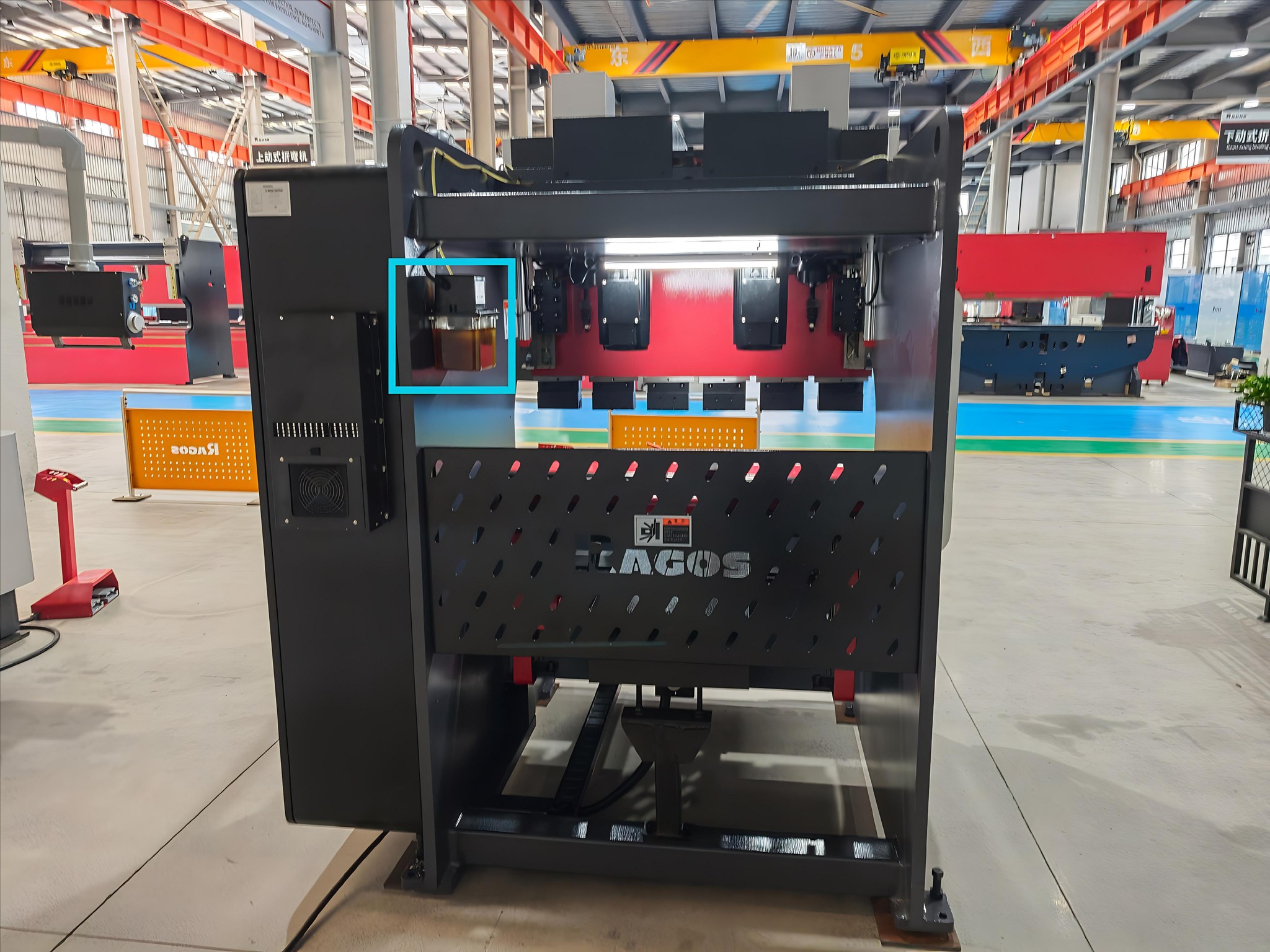
Our electric press brakes are equipped with an automatic lubrication unit that supplies the lubrication points connected to its oil circuit, according to the machine settings. This reduces repeated manual oiling work. Confirm in the supplied lubrication diagram which points are connected to the automatic circuit for the model being ordered.
Check the reservoir level, oil lines, and actual lubricant delivery at those points during routine service. Refill with the specified oil when required.
Manual lubrication every 100 operating hours
For bearing-housing arrangements where the supplied lubrication diagram shows manual oiling, we recommend adding oil to the bearing housing every 100 accumulated operating hours as a baseline service interval, to lubricate the bearings inside it.
Review the interval against the machine manual, workload, dust levels, and inspection findings. Record the replenishment date and operating hours so the next service is easy to schedule.
How often should you clean the Y-axis screw?
Base the cleaning frequency on conditions around the machine. A press brake close to grinding or laser-cutting operations may need more frequent dust inspections. Check the exposed screw and accessible guards for accumulated dust and debris.
Stop the machine and follow the energy-isolation procedure in its instructions before reaching the screw or its guards. Then use the cleaning method specified in the maintenance manual. Remove contamination from the accessible surfaces while keeping it out of the screw nut. After cleaning, check lubrication condition according to the instructions for that assembly and log the work.
Why does drive belt quality affect maintenance costs?
Belt quality can differ in reinforcement, tooth materials, dimensional consistency, and resistance to repeated loading. When selecting a spare, confirm the complete approved specification with the machine supplier, including the belt manufacturer, model, tooth profile, pitch, width, and application rating.
Our pricing guidance is that a higher-quality belt can cost 5–10 times as much as a low-cost alternative, depending on the specification and supply terms. Compare current quotes for the required belt before budgeting.
Using a cheaper belt can lower the machine's initial build cost. If that belt is underspecified or its quality is inconsistent, early wear or failure can create service work and unplanned production stops. The cost can include replacement parts, freight, a technician's visit, tension and alignment checks, and trial bends before production resumes.
For a Y-axis main-drive belt, an interruption can leave the machine unable to bend until the fault is resolved. Ask the supplier which belt is fitted, where the approved spare is stocked, and what needs to be checked after replacement. Carry those details into the machine comparison. Review our electric press brake drive and model information
What happens when a timing belt is loose, overtightened, or worn?
Insufficient tension can let a synchronous belt jump teeth. Excessive tension increases stress on the drive components and can shorten service life. Shock loading can also contribute to failure. A technician should inspect belt teeth, pulleys, alignment, and the specified tension using the procedure for that machine. Gates synchronous belt maintenance and troubleshooting manual
Wear at the belt and pulley teeth can increase clearance during reversal. The effect on ram positioning depends on the transmission and where position feedback is measured. Replace the belt when it reaches the manufacturer's wear limit or a service investigation confirms that its condition is causing unacceptable Y-axis performance.
After replacement, check the specified tension and alignment, verify ram repeatability, and confirm a representative first part. Use a recorded trial bend to verify the finished part
How often should belt tension be checked?
Use the interval and measurement method in the model's maintenance manual. Record the operating hours and measured condition. A slack alarm, damaged teeth, unusual noise, or a change in positioning calls for an inspection under the machine's service procedure.
Can ball screw wear affect accuracy after three or four years?
Yes. Ball screw condition can affect stiffness and positioning performance under repeated load. NIST's ball screw degradation study describes an initial loss of rigidity before measurable backlash appears. That supports checking both unloaded positioning and behavior under load during a service investigation. NIST study of early ball screw degradation
Use a three- or four-year review as a planned comparison against the machine's acceptance baseline. The actual need for repair or replacement depends on accumulated cycles, load history, lubrication, mounting, measured performance, and the manufacturer's limits.
Repeat the agreed ram measurements and trial bends with comparable material, tooling, and measurement conditions. If the part angle has changed, also review material lots, tooling, and compensation settings.
What records should you keep from acceptance onward?
| Keep this record | What it helps you check later |
|---|---|
| Model, serial number, drive drawing, and service manual | Applicable belt, bearing, screw, and lubrication requirements |
| Typical loads, operating hours or cycles, and service dates | How the machine has been used between inspections |
| Screw cleaning, bearing housing oil replenishment, and automatic lubrication checks | Whether the service plan suits the actual conditions |
| Ram repeatability, test locations, directions, and load conditions | Whether Y-axis motion has changed |
| Material lot, actual thickness, tooling, unloaded angle, and flange dimensions | Whether a performance change affects the finished part |
Agree the baseline measurements and repeat-piece checks before acceptance. Keep the results with the machine's maintenance history, and see our acceptance worksheets and reference downloads.